Interview
Riccardo D'Agnese: Football Club Maps From Abruzzo to Antarctica
Riccardo D'Agnese has drawn about a hundred football maps. We asked him how he makes them and which clubs go on them.

By Leo4815162342 and Riccardo D'Agnese · 6 min read
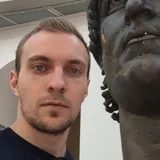
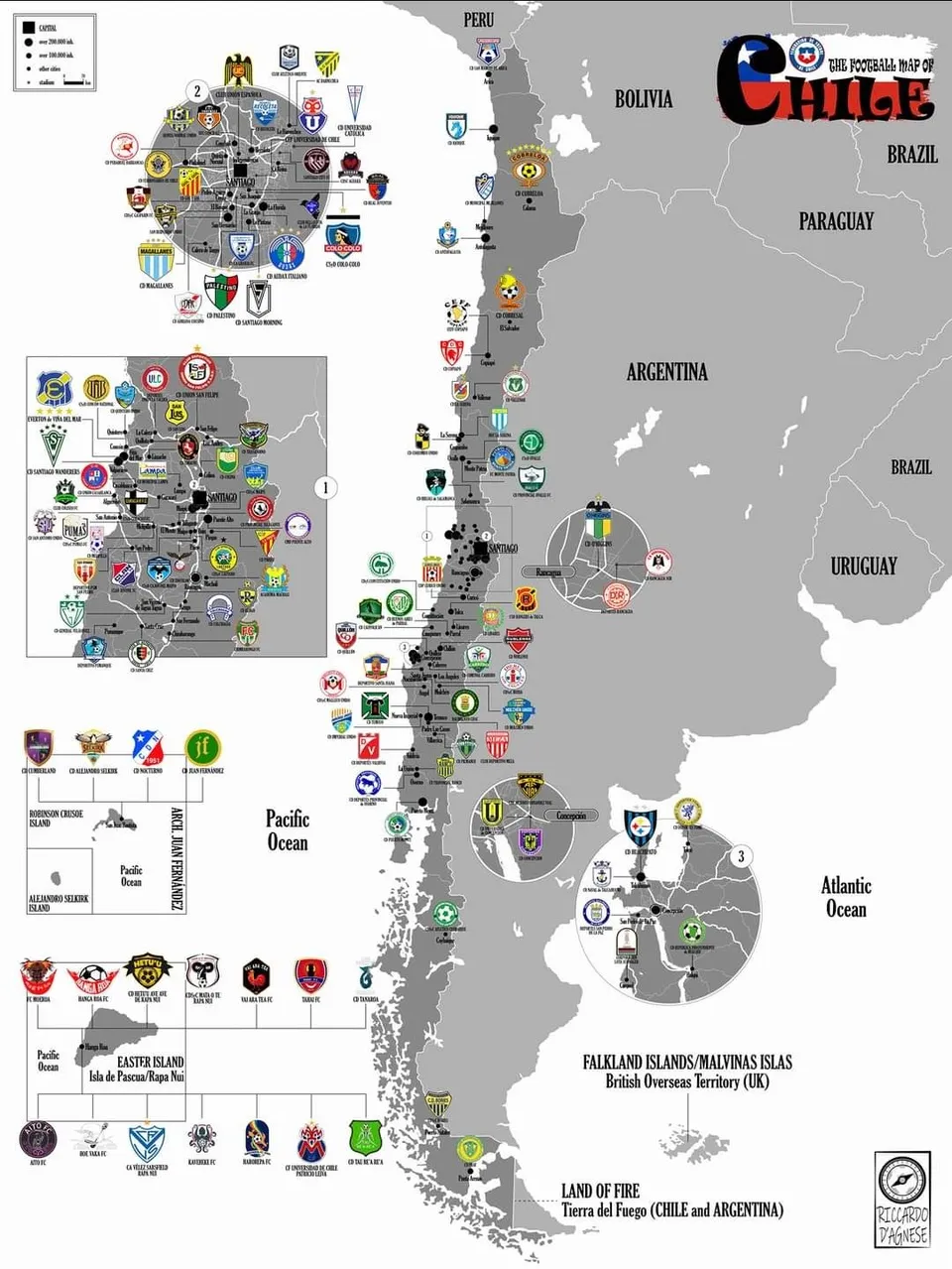
Riccardo D'Agnese is a marine biologist from Pescara, Italy, who draws football maps. Each map shows one country or territory, with club crests placed where the clubs play, including many from the lower leagues. His map of Argentina has about 350 clubs, and his map of Chile covers the top five levels.
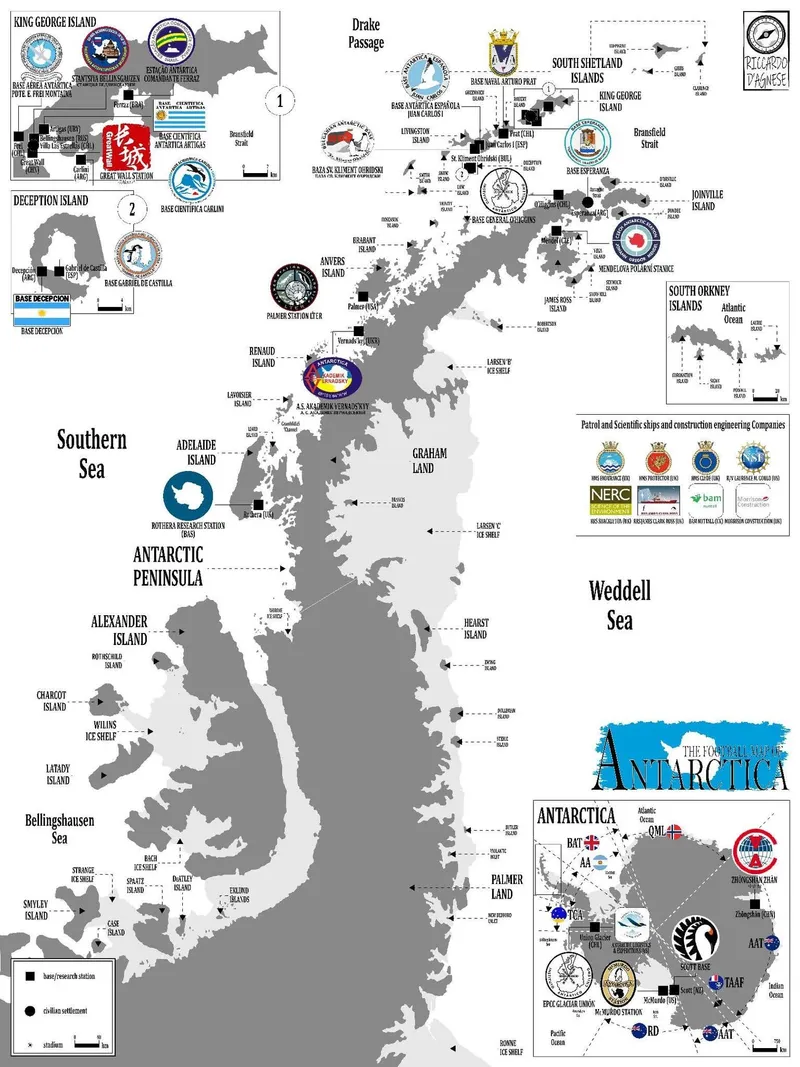
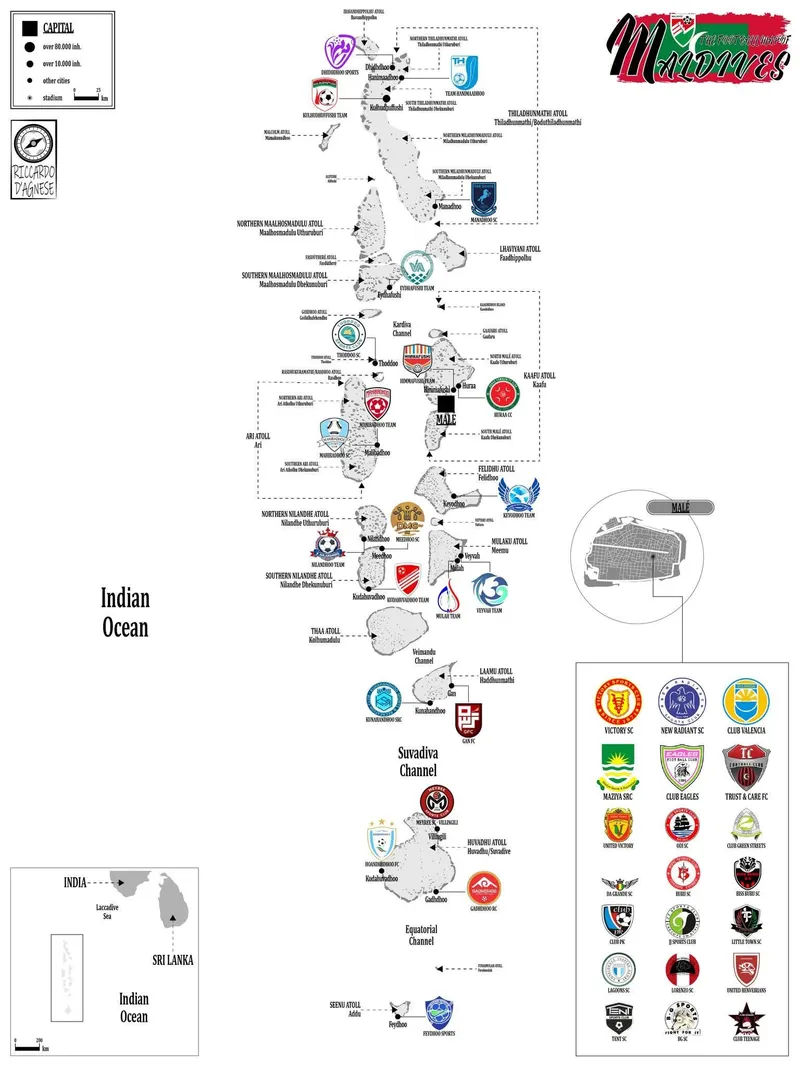
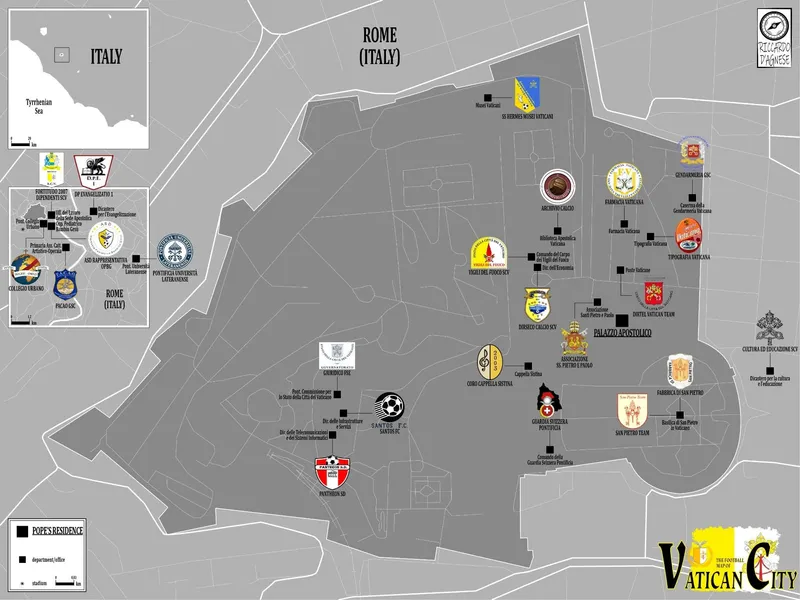
He has drawn about a hundred maps, including Italy, Brazil, Indonesia, Vatican City, the Maldives and Antarctica. He posts them on X, where his most popular maps have hundreds of thousands of views. In 2023 he registered his map designs with the EU Intellectual Property Office. He sells posters of 30+ maps in his online shop.
We asked Riccardo how his shirt collection led to the maps, how he chooses the clubs and what he has learned about football in remote places.
How did you first start creating football maps?
I began creating football maps around 2017, starting with a very basic map of my region in Italy, Abruzzo. The idea came from wanting to give all the teams I know a definite location, since this passion was born from the fact that, first and foremost, I collect football shirts from all over the world, and I'm among the world's leading collectors in terms of rarity.


Which maps are you most proud of, and why?
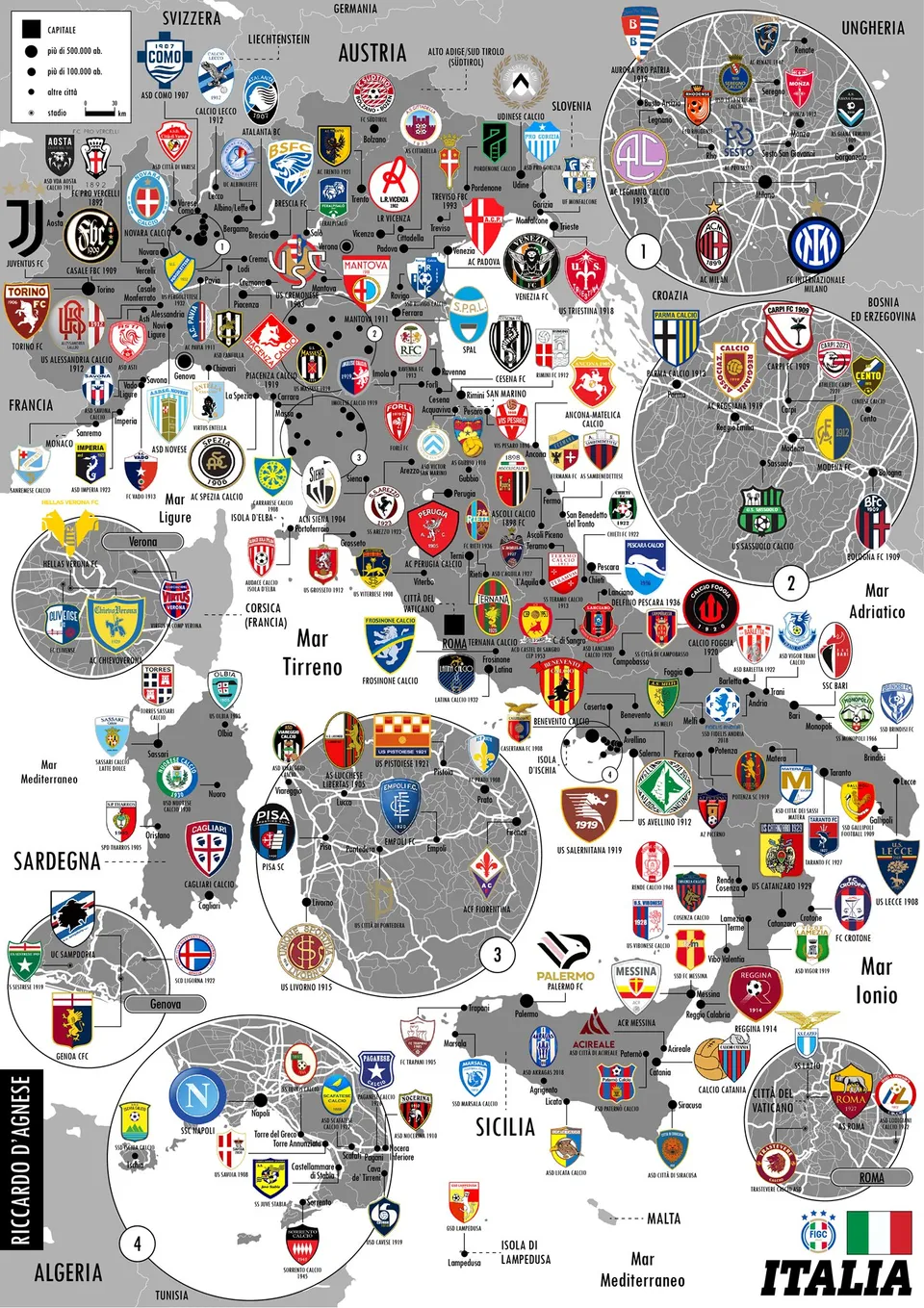
I'm proud of all the maps I've made so far. Probably the one I'm proudest of is Italy's, which resonated widely on social media and allowed me to start becoming known. But in general I'm proud of all the maps I make, because in each one there's study, research and passion.
Can you describe your process for researching and creating a map, from finding clubs and their logos to the final design?
I make the maps by drawing them by hand with digital graphics tools. I try to be very attentive to detail, considering both the political and the geographical aspects of the map. The search for the logos is done online, and I decide in advance down to which level of the football system I'm drawing it's possible to go, based on the number of clubs and the size of the map.
How do you decide which clubs to include, particularly in countries with thousands of teams?
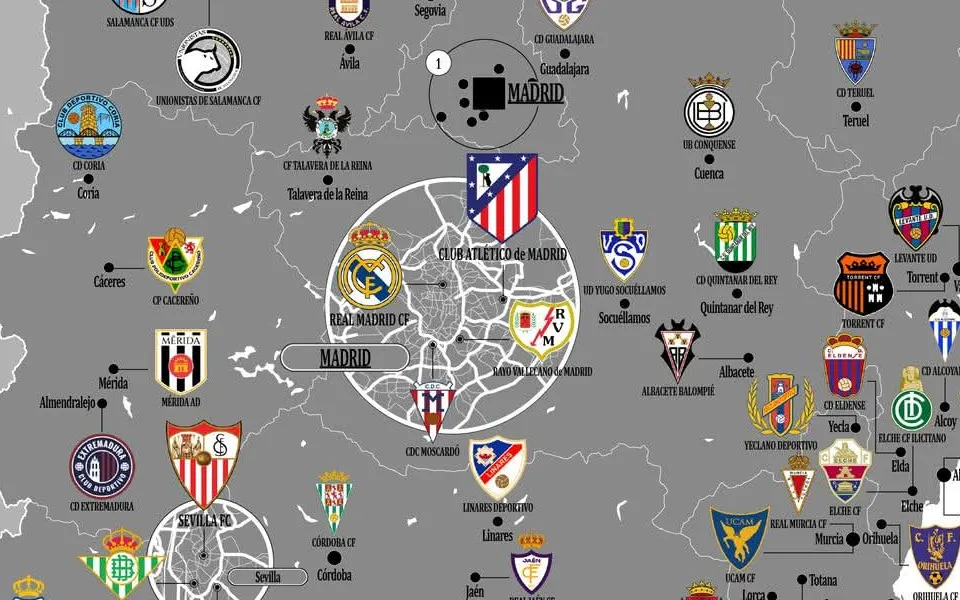
The choice always depends on the space available. The ideal is to cover the map as much as possible, while being careful not to overlap logos, text and lines. Generally, as I said in the previous answer, I study in advance the number of teams for each level of the football pyramid and try to reach the lowest level possible. Usually no further than the fourth or fifth level, but each case is different.
What's the most challenging part of creating an accurate and visually appealing football map?
The most complex aspect is trying not to overlap the logos, and taking care to find the right compromise between the number of logos to insert and the number of teams to put in. For example, if I know I can put in all the teams of a hypothetical fourth level of the local football pyramid, I do it; if I realise it isn't possible to insert all the teams of that level, I prefer to stop one level earlier rather than leave a level half done. This is to give due respect to all the teams I'm putting on the map, even though it isn't simple and there will always be people who are unhappy.
Have you discovered any particularly beautiful, unusual, or interesting football logos during your research?
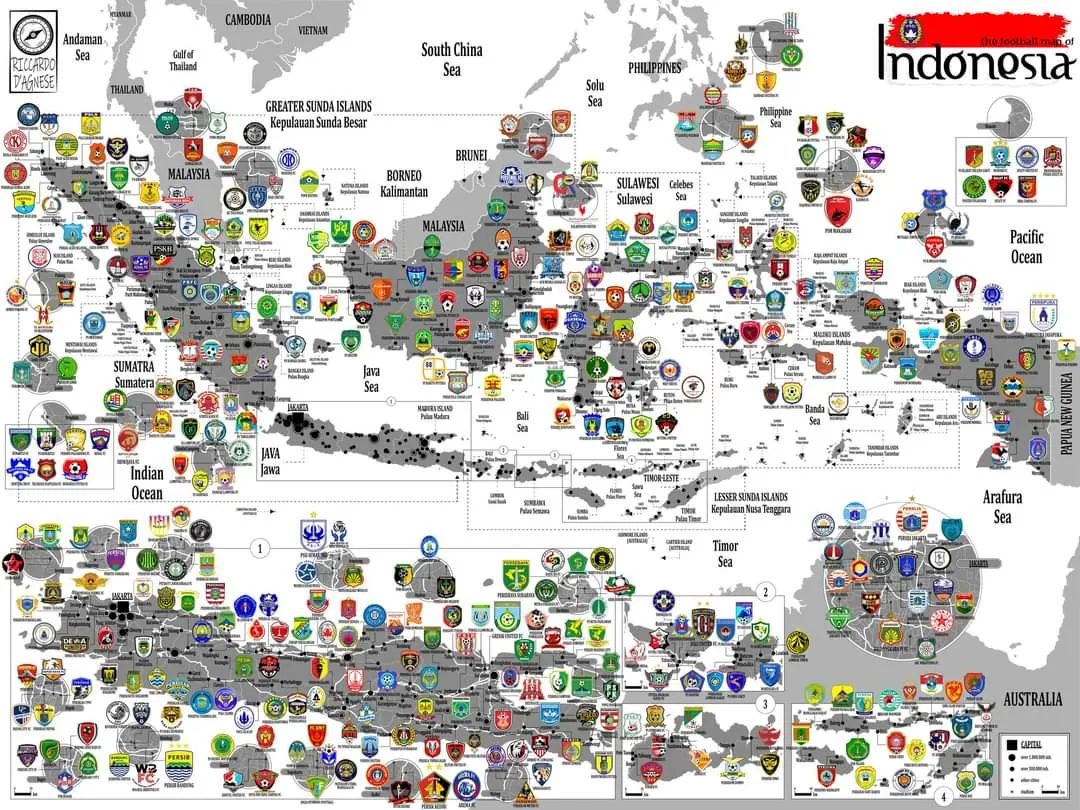
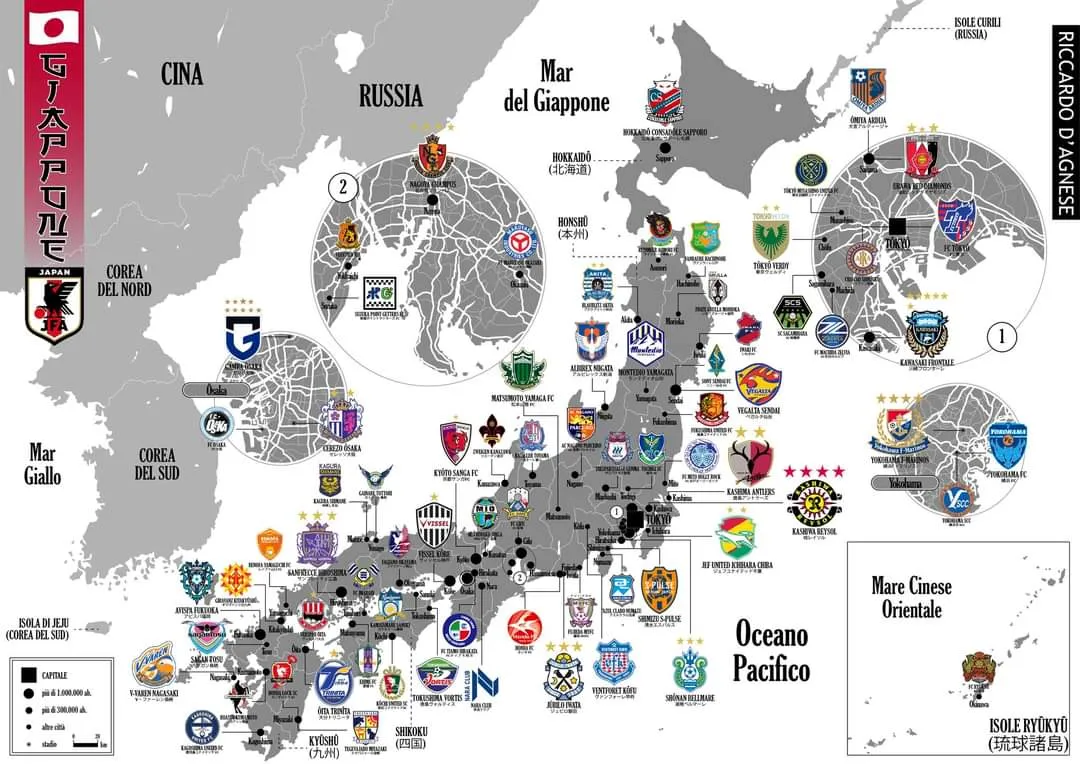
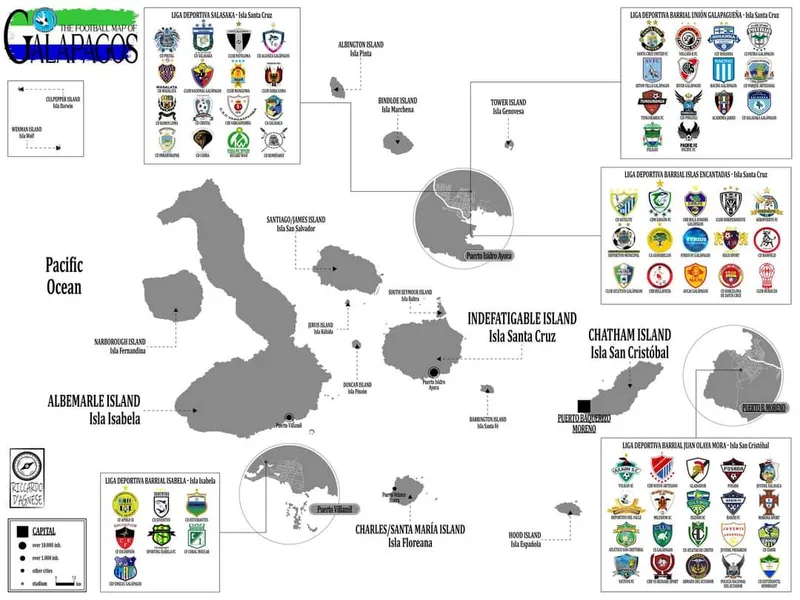
Yes, every country has exceptional logos, even ones that are little known or not known at all. The most complex map I've made is Indonesia's, and it has a great many stunning logos, but the map of Japan also has many teams from the lower levels with wonderful logos, or the map of the Galápagos Islands, which has several local leagues, and all the teams have interesting logos.
It surprises me that many clubs in remote leagues that have no logos are taking advantage of AI to generate semi-official logos for themselves, even very detailed ones.
Have you noticed any interesting cultural or regional patterns in football club logos?
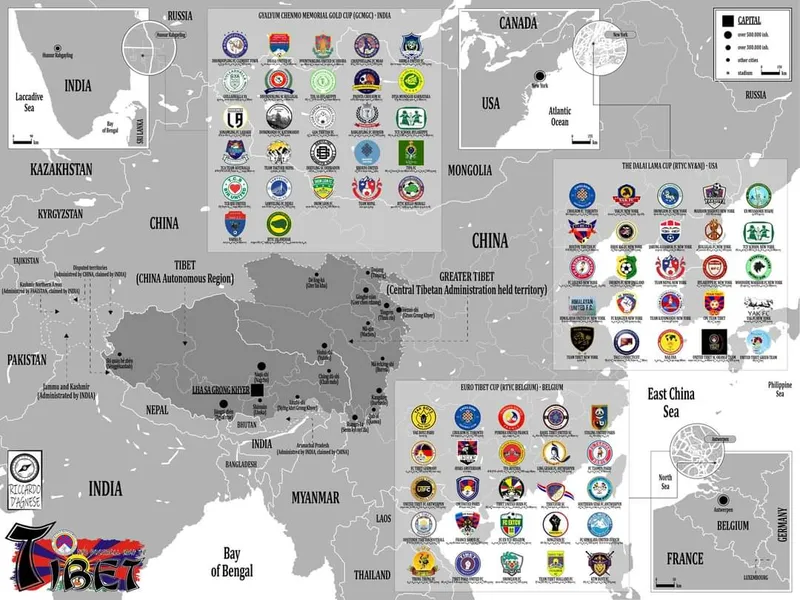
Many times I've noticed that logos represent the culture of a place or of an entire country. In the case of the map of the teams representing the Tibetan diaspora, for example, every logo refers to cultural elements related to that place. Or, again on the Galápagos map, several logos have the symbol of the tortoise, which is a local emblem. Or teams from Polynesia don't hold back from using elements typical of their culture in their emblems, making them unique worldwide.
What's the most surprising discovery you've made while exploring football in remote parts of the world?
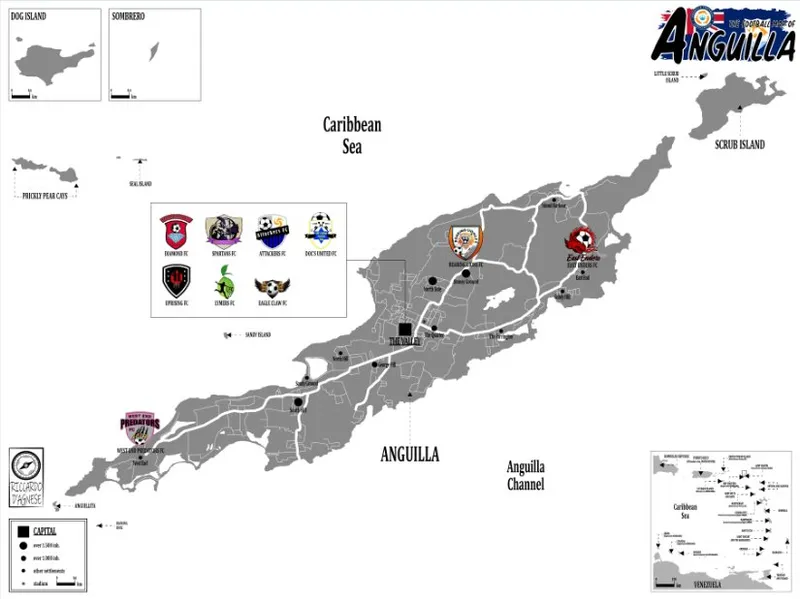
The main discovery I've made is that football is played practically everywhere, discoveries I've made thanks to the research I've done when searching for shirts from the most remote and incredible places in the world.
What are your plans for the future of your football maps?
My goal is to try to make maps of every state and territory in the world, because I believe that football, and maps too, are a cultural tool that can unite peoples and their identities.
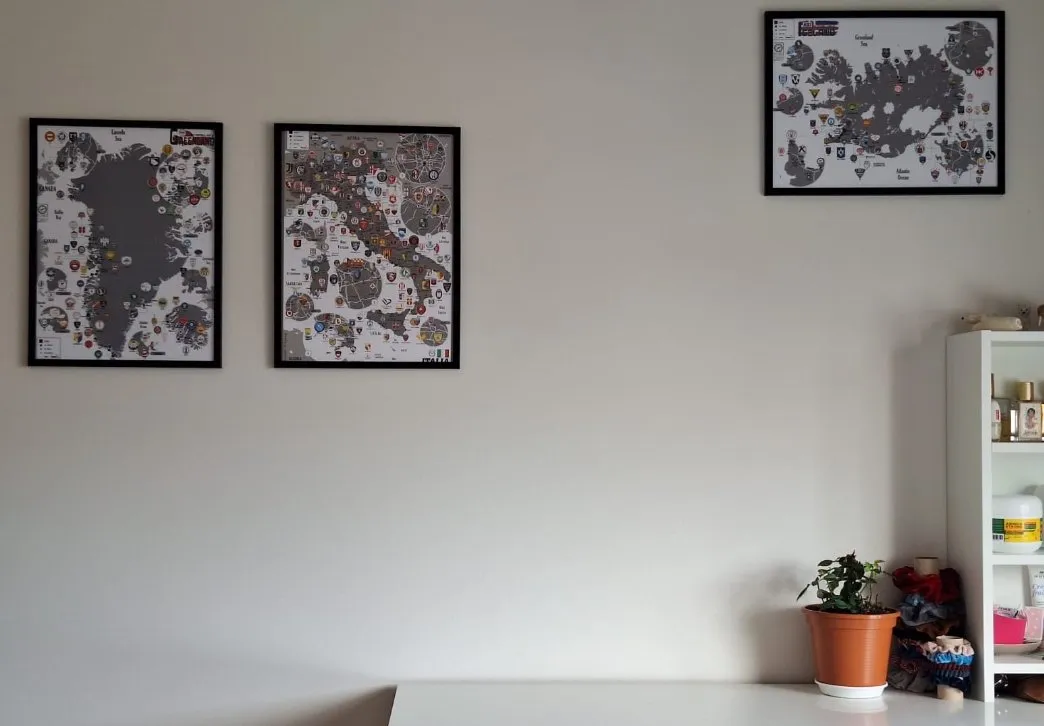
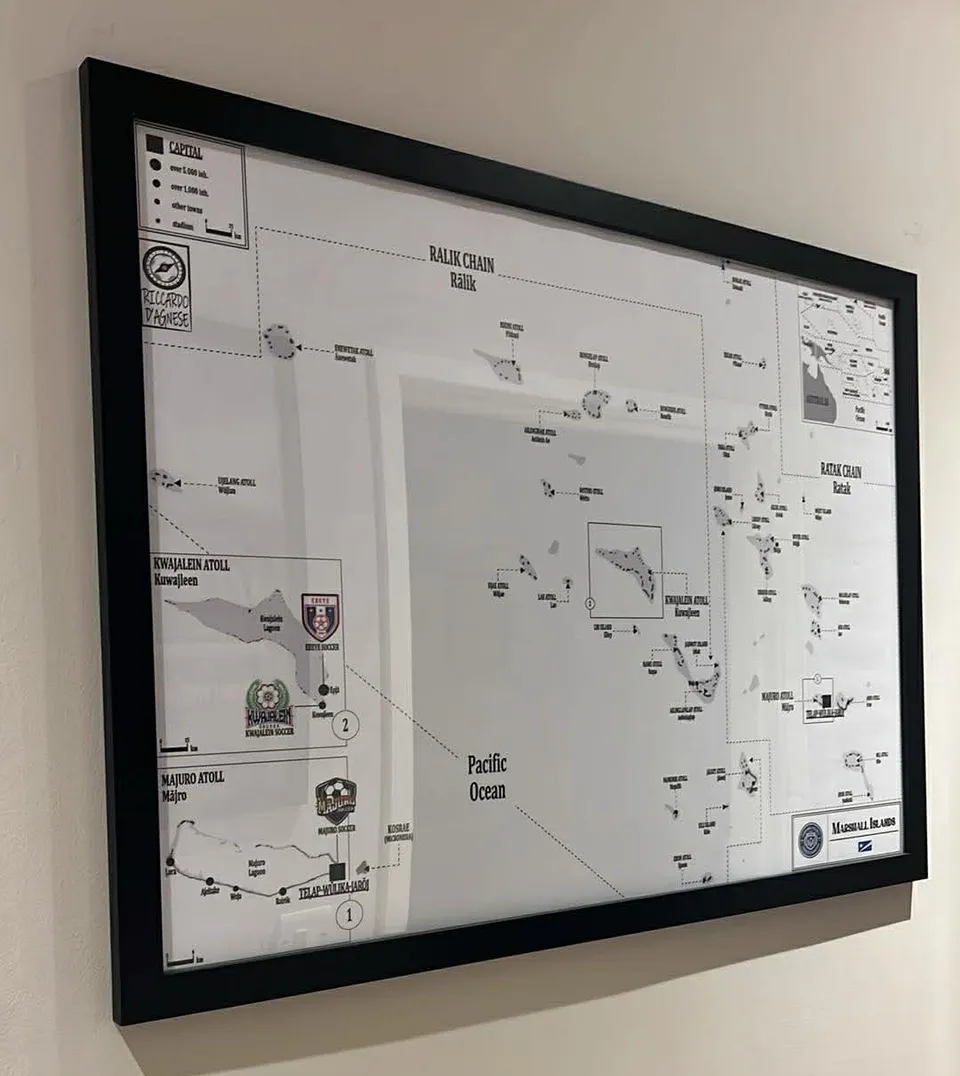
Support Riccardo's work
Riccardo sells posters of 30+ of his maps, from Italy and Spain to Brazil, Japan and Indonesia, in 30 × 40 or 50 × 70 cm. They ship internationally from Italy, and buying one is a direct way to support his work.